Fitness AI Planner
AI fitness and diet plans built for how people actually live
A mobile app that generates progressive training and diet plans from a user's goals, equipment and locally available food.
The challenge
Most fitness apps assume a well-equipped gym and a Western diet. For users in smaller Indian cities, the plans they produce are hard to follow: the food is unfamiliar or unavailable, the equipment is not there, and the app expects a reliable connection.
The requirement
- Plans generated for the individual, not picked from a library of templates.
- Diet plans built from food the user can buy locally.
- Workouts that adapt to the equipment available: a full gym, a pair of dumbbells or nothing at all.
- A plan that progresses over several months.
- An app that still works when connectivity is poor.
The solution
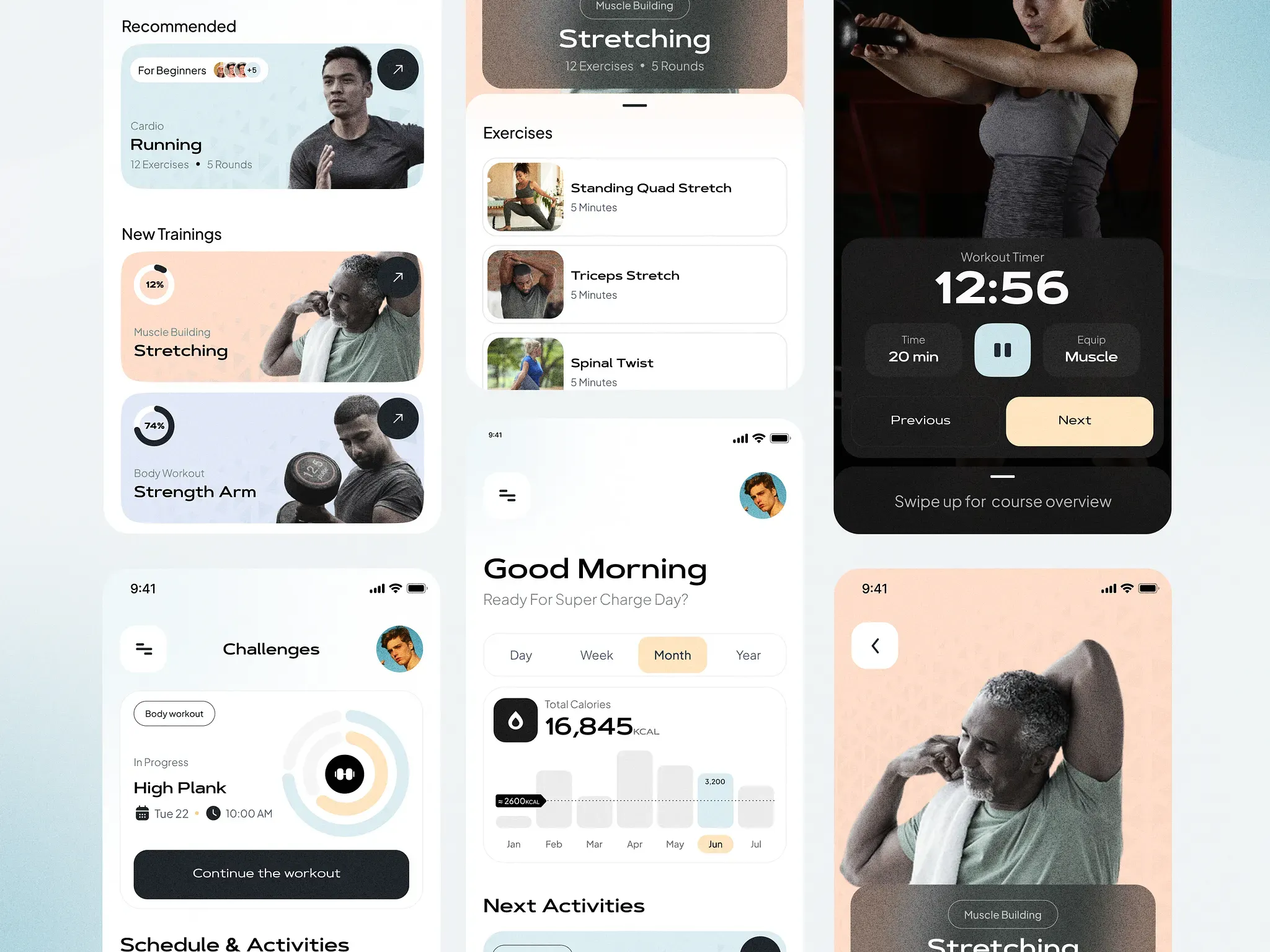
The user enters their goal, current activity level, body measurements, food preferences and available equipment. From those inputs the app generates a phased plan covering both training and nutrition, with intensity increasing from one phase to the next.
Diet plans hit their nutritional targets using regional staples. Workouts are selected for the user’s equipment and recalculated if that changes.
Architecture
The mobile app is built in Flutter. Plan generation runs in a Python service, where a language model works within constraints set by code: the nutritional targets, the allowed exercises for the user’s equipment, and the structure of the plan. The model fills in the plan; it does not decide the rules.
Plans are stored on the device so the user can follow them offline, and synced through Firebase when a connection is available.
Technology
Flutter, Dart, Python, a language model for plan generation, and Firebase.
Outcome
A working mobile product in which the AI component does a specific, bounded job: turning one person’s constraints into a plan they can follow with the food and equipment they have.